Selected Moments From Toronto School of Drywall
Toronto School of Drywall’s work extended beyond the classroom into hands-on skill development, workforce preparation, media education, industry collaboration, and international training. This page brings together selected examples from that history — including the work, partnerships, and decisions that helped shape what TSD is becoming today.

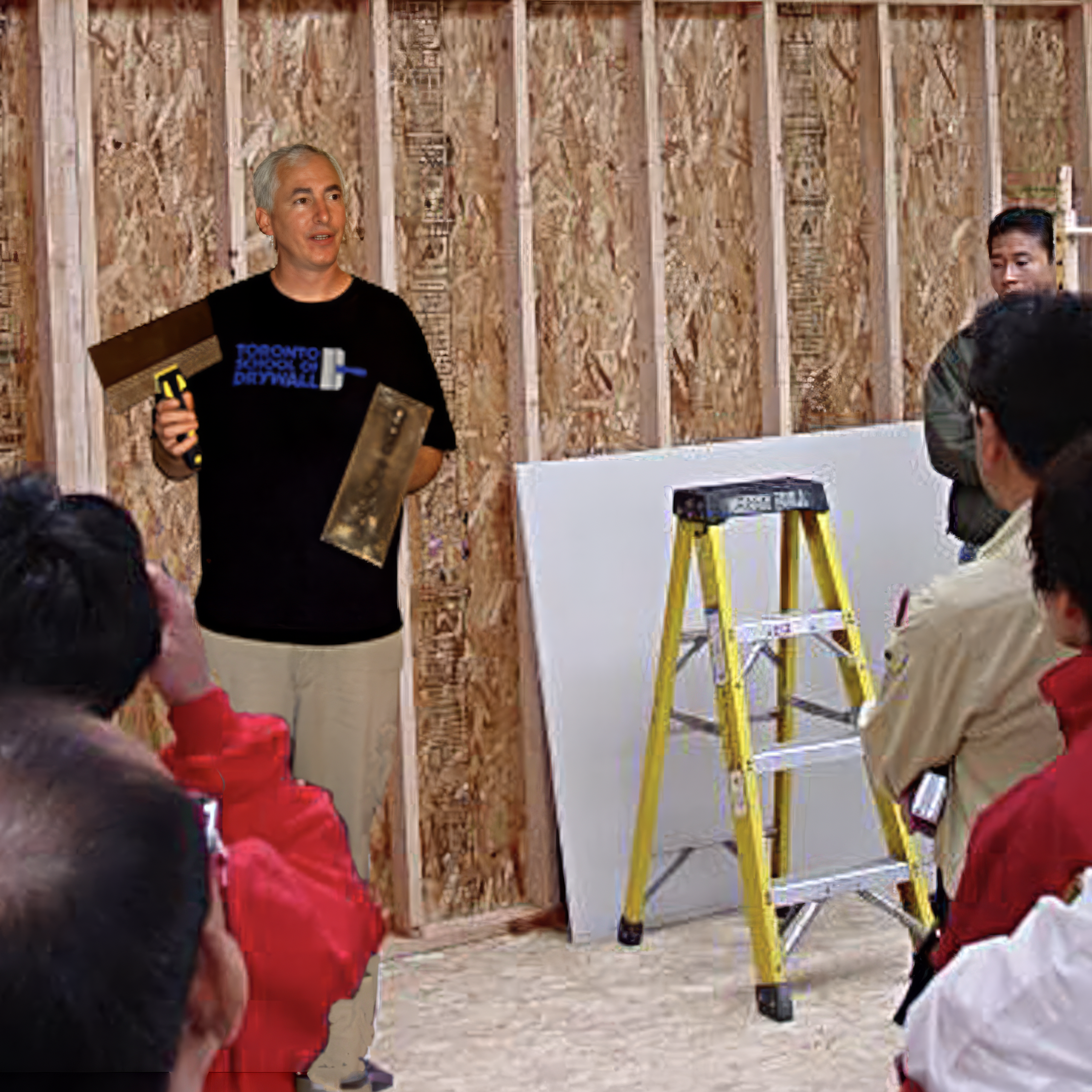
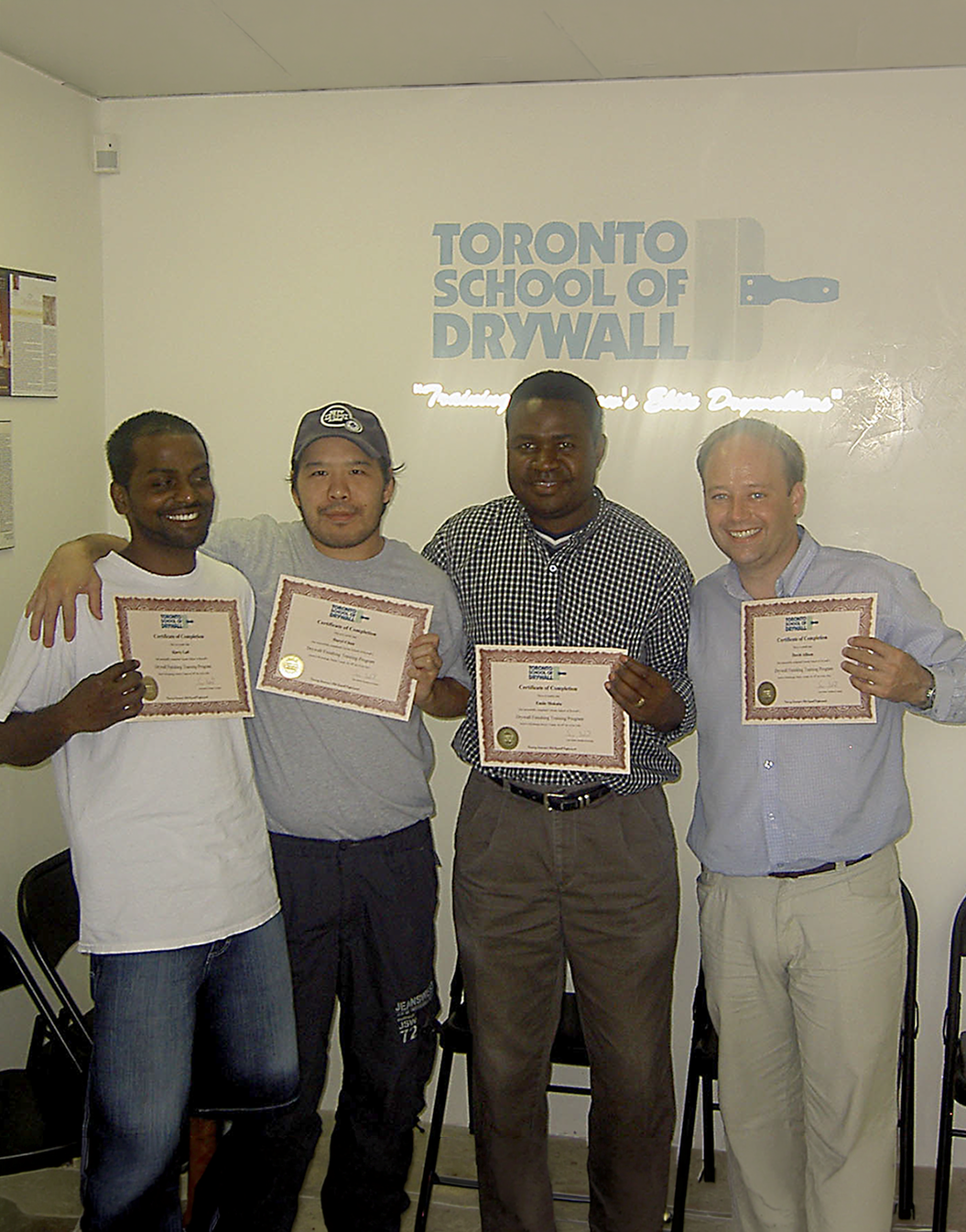
Hands-On Training & Certification
Structured classroom instruction, real-world practical training, skills assessment, and documented competency development.
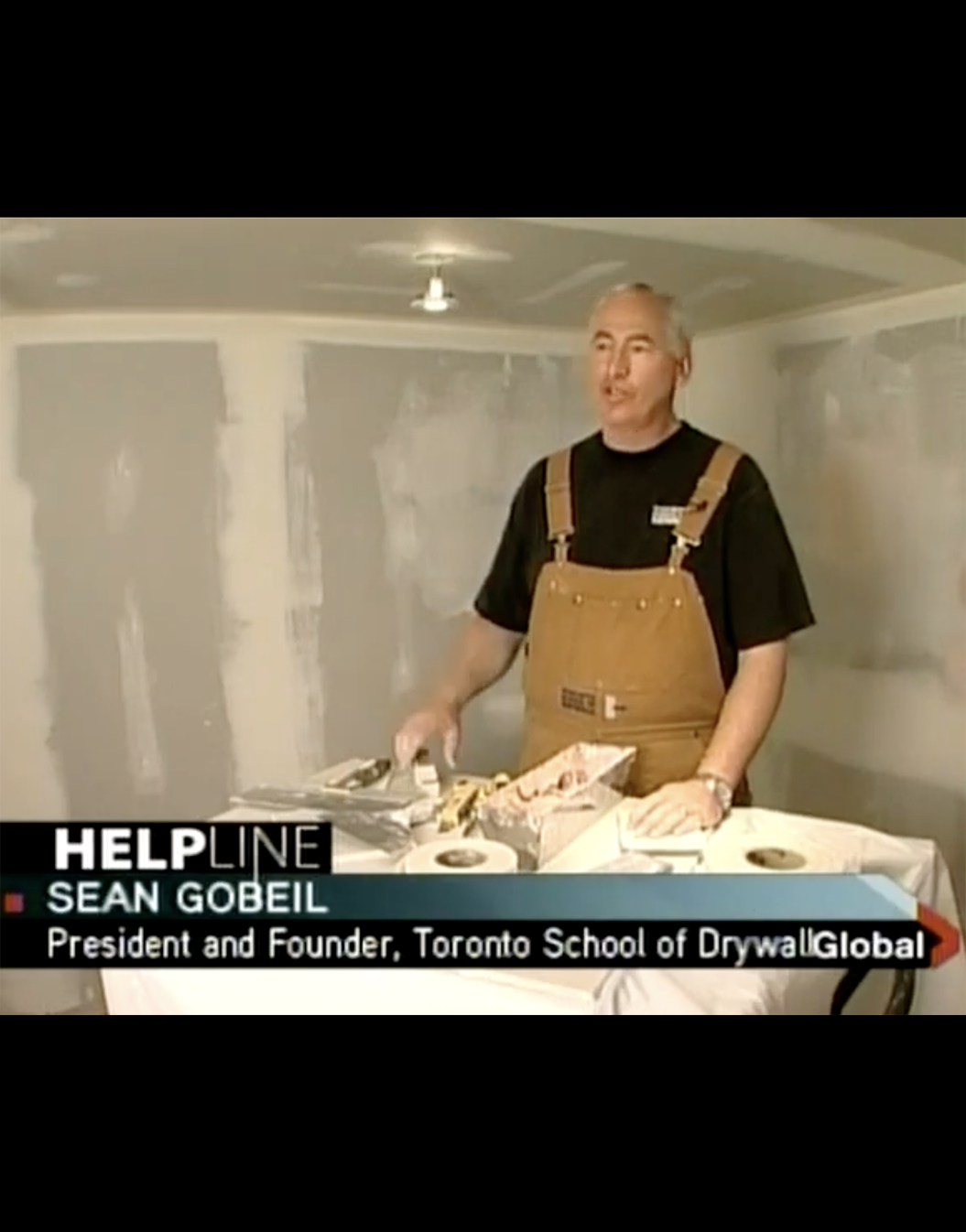
Media Coverage
Drywall demonstrations and homeowner education featured in broadcast media.
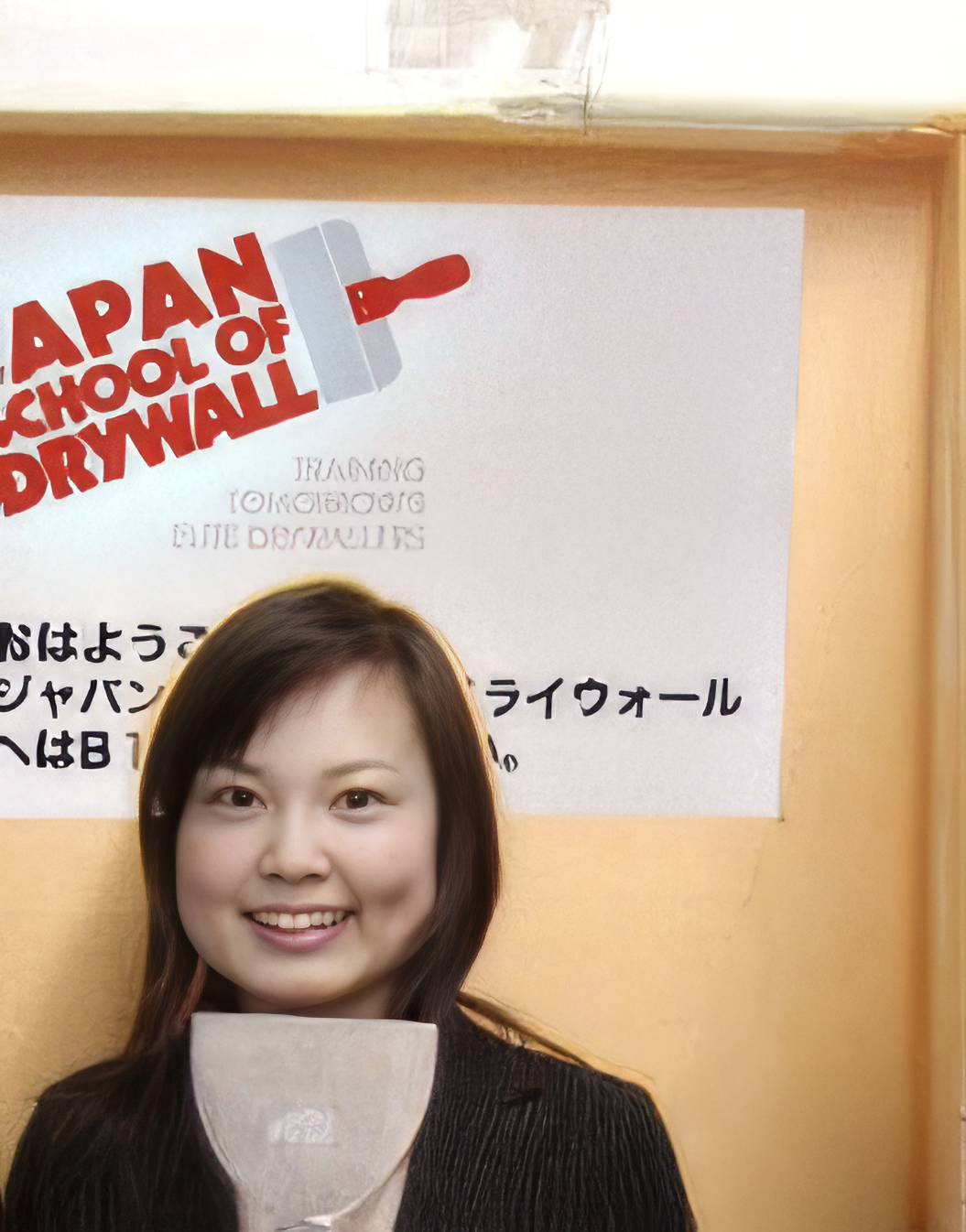
Industry & International Work
Training, demonstrations, product education, and collaborative projects in Canada and internationally.

Skills Assessment & Workforce Readiness
Measurable skill development designed to prepare students for real employment and independent work.
FROM THE ARCHIVE
Skilled Trades, Employment & Drywall Training
In this 2005 AM640 Toronto interview, Toronto School of Drywall founder Sean Gobeil discussed the growing need for skilled tradespeople, changing perceptions of trades as a career path, and the shortage of formal drywall-specific training.
The interview also explains why TSD was created: drywall finishing was largely learned informally, with few structured training options for people trying to enter the trade.
“It’s nice to do something with your hands and have a skill.”
Project & Training Feedback
Selected feedback from clients, collaborators, and drywall employers reflects the range of Toronto School of Drywall’s training, industry, and international work.
“I had the pleasure of collaborating with Sean on various projects in three different countries. Sean developed a training program where Japanese building professionals learned the basics of Drywall Finishing in Seattle. This led to our next collaboration in Tokyo, Japan… Finally Sean wrote, directed and produced a series of educational videos in China…”

Benjamin Moore Japan / Canada Wood
Greg Hoing / International project collaborator
“Sean was required to construct the test walls and, more importantly, train marketing people on how to apply drywall tape properly using various techniques… The quality of his work was outstanding — his training walls and techniques were used in our official launch of the product and helped with the overall success of the product.”

CertainTeed
Tom Sass / Project Manager
“It is refreshing to see a quality-training program for tapers. There is a huge demand these days for skilled workers and finding them is very difficult. There are many who ‘say’ they are tapers but who in fact are not real professionals. Your program will produce such much-needed professionals in my Industry.”
BIASUTTI DRYWALL
Rene Vin / President & Owner
SEATTLE & TOKYO

Seattle demonstration session with Japanese building professionals.
Drywall Training for Benjamin Moore Japan
TSD’s work with Benjamin Moore Japan began with a demonstration session in Seattle, where Japanese building professionals were shown the value of structured drywall-finishing instruction and higher finishing standards.
That proof of concept helped lead to a full training program in Tokyo, where TSD delivered drywall-finishing instruction to working contractors. The objective was practical: better drywall preparation and finishing meant a better final result for Benjamin Moore paint products.
BEIJING & SHANGHAI

On-location filming in Beijing for Canada Wood China’s wood-frame construction education series.
Wood-Frame Education for Canada Wood China
Canada Wood China engaged Toronto School of Drywall to develop a series of educational videos promoting wood-frame construction to the Chinese market.
Over the course of roughly a year, TSD wrote and produced approximately ten videos in Chinese and English, with filming carried out in both Beijing and Shanghai. Topics included the benefits of wood-frame construction, fire safety, comparative cost, and sustainability.
TSD’s drywall expertise was particularly relevant because drywall is an integral part of wood-frame construction, contributing to fire performance, insulation, affordability, ease of construction, and the quality of the finished interior.
Between Then and Now
Toronto School of Drywall’s original school did not evolve uninterrupted into the organization you see today. There was a prolonged pause between those chapters. For those interested in what happened — and why — the answers are below.
TSD’s career-training model deliberately differed from the conventional vocational-school format. Theory was taught at the school, while much of the hands-on instruction took place at carefully selected real-world training sites. Students learned on actual projects, under changing conditions, where judgment, problem-solving, and practical performance mattered.
That approach was central to the program’s results, but it eventually came into conflict with the regulatory framework governing vocational schools, which was built around a more traditional school-centred model.
TSD was faced with a choice: substantially reshape the program to fit that framework or stop delivering it. The decision was made not to compromise the training approach that had proven so effective.
Yes.
Toronto School of Drywall did not continue operating quietly in the background as a school. Its career-training program ended, and TSD ceased active operations for a prolonged period.
Its founder moved into broader corporate learning and development work, gaining further experience in adult learning, instructional design, digital education, workplace training, and the development of hands-on and psychomotor skills at scale.
The interest in drywall training itself never disappeared. The longer-term objective remained to return to career-level drywall skill development with a different model rather than simply reopen the old school.
Because compliance would have required much more than changing a few procedures.
TSD served a highly specialized market. Operating a conventional physical vocational school for hands-on trades carries substantial facility, staffing, equipment, administrative, and regulatory costs. Larger vocational schools can spread those costs across many different programs and occupations. A drywall-only school had far less ability to do that.
Meeting the conventional model would therefore have meant both changing an approach that was producing strong results and expanding well beyond TSD’s drywall specialty simply to support the economics of operating the school.
That was not the organization TSD wanted to become. The objective was to remain focused, lean, practical, and effective.
Rather than invest heavily in reproducing a traditional vocational-school model, the decision was made to step away and rethink how rigorous career-level drywall training could eventually be delivered in a more flexible and scalable way.
At the time, TSD’s purpose was fundamentally career-level drywall skill development. Consumer education, retail training, media work, and industry collaborations were valuable parts of the organization, but they were not the reason the school existed.
When the career-training model became untenable, the decision was made to step away rather than redirect TSD into a consumer-training business that no longer reflected its primary mission.
During the years that followed, its founder continued working in learning and development, with particular attention to adult learning, psychomotor skill development, instructional design, and the use of technology to make practical training more flexible and scalable.
The long-term goal remained the same: return to the problem of career-level drywall training with a fundamentally different model.
Today, advances in online learning make it practical to bring some existing TSD resources back into use immediately for DIYers, tradespeople who use drywall as part of broader work, and retail staff — while the larger challenge of reimagining career-level drywall skill development continues separately.